Our mission is to unlock the potential within each individual and organization through tailored, engaging, and effective safety and emergency response training.

Get in Touch
Get in Touch
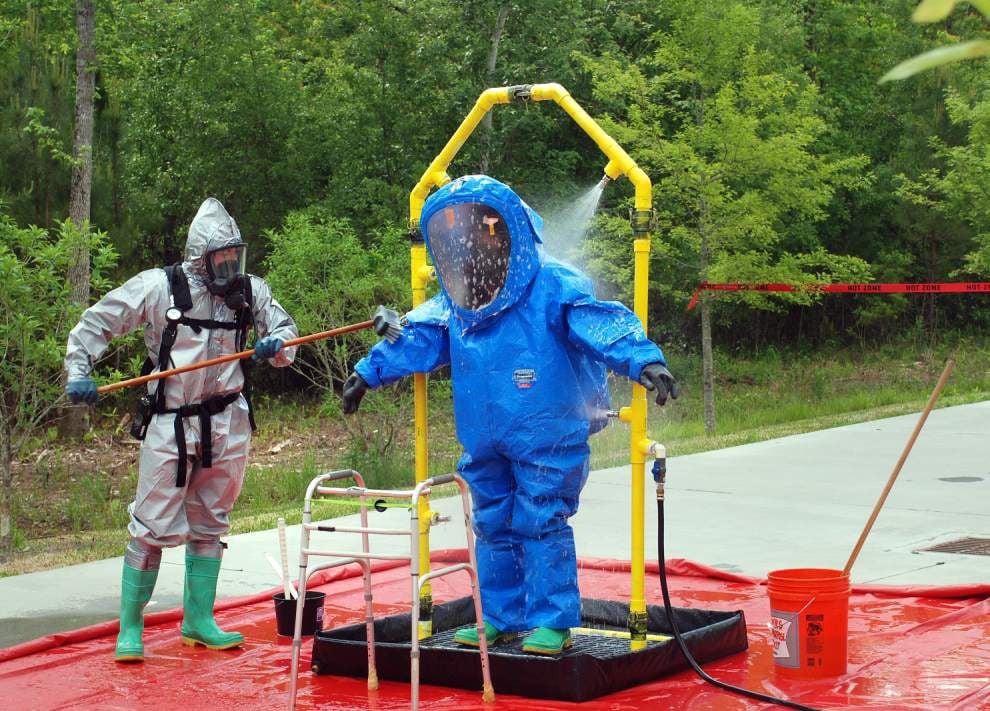
Introduction: When dealing with hazardous materials (HAZMAT) incidents, emergency response teams (ERTs) are tasked with managing life-threatening situations. The complexity of these incidents requires thorough planning, coordination, and swift execution. While much emphasis is placed on containment, analysis, and personal safety, a crucial step often fails to receive the attention it deserves: Decontamination.
Many industrial ERTs meticulously strategise every aspect of their response—from analysing Safety Data Sheets (SDS) and consulting Hazchem guides to monitoring wind direction and setting safe perimeters. But when the incident is nearing its end, and the focus shifts to resolution, the decontamination procedure is frequently overlooked or underperformed. This critical failure can have severe consequences, including cross-contamination and putting more lives at risk long after the immediate danger has passed.
In this blog post, we will delve into why “slow is smooth, and smooth is fast” should apply throughout the entire HAZMAT response process, and why investing in effective decontamination is essential to safeguarding lives.
The first steps in handling a HAZMAT incident are critical. These actions establish the foundation for an effective response where personal safety, team safety, and the well-being of the public are paramount. The mantra of “slow is smooth, and smooth is fast” speaks to the need for deliberate, calculated actions that prevent mistakes and ensure optimal outcomes.
Through this deliberate approach, safety is prioritised. Every decision is aimed at ensuring smooth operations without unnecessary haste—where errors could cost lives. However, even with perfect planning and execution, the job is far from over if the team does not complete the final, critical phase: decontamination.
Despite a smooth operational response, many industrial ERTs falter when it comes to decontamination. Whether it’s due to lack of training, insufficient equipment, or a misunderstanding of the risks, teams often fail to complete this vital step. This can lead to contamination after the incident and even cross-contamination of personnel, equipment, and the public.
Decontamination is not just an afterthought—it is a vital part of ensuring the health and safety of everyone involved, both during and after the incident. Hazardous materials, if not properly cleaned off or contained, can spread far beyond the original site of exposure. Even trace amounts of a toxic substance on a firefighter’s gear or on response equipment can cause serious health risks later.
The following are real-world examples that highlight how properly implementing decontamination procedures in HAZMAT incidents can lead to severe consequences, including cross-contamination and public safety risks.
In one incident, firefighters responded to a chemical spill involving hazardous gases. The response was successful in terms of containment, but the decontamination procedures were not thorough. After the incident, the contaminated gear was improperly cleaned and stored. When the gear was used again in a later response, trace amounts of the hazardous chemicals were transferred to other responders and equipment. This cross-contamination resulted in multiple team members experiencing respiratory issues and required extensive decontamination efforts to resolve.
In another case, an industrial HAZMAT team responded to a chemical leak at a manufacturing plant. While the incident was well-managed on-site, the vehicles used to transport workers and equipment back to the facility were not decontaminated. As a result, traces of the toxic chemical were carried into public spaces, including the emergency services station. This caused secondary exposure for workers and nearby civilians, leading to a costly and preventable public health issue.
In a major industrial accident, a company dealt with a large hazardous material spill. The ERT responded efficiently, following their risk assessments and using the appropriate safety protocols. However, when it came to decontamination, insufficient measures were taken to ensure the hazardous chemicals were neutralised and contained. Runoff from the incident site led to nearby waterways being contaminated. This not only affected the local environment but also exposed nearby communities to toxic substances, resulting in long-term health effects and lawsuits.
Decontamination is the final line of defence in a HAZMAT incident, ensuring that contaminants are not carried beyond the hot zone. Here’s why it must be a priority for every emergency response:
If responders, equipment, or vehicles leave a hot zone without proper decontamination, hazardous substances can be spread to clean areas, endangering workers, their families, and the general public. Proper decontamination ensures that harmful agents are confined to the incident site and safely neutralised.
By completing thorough decontamination procedures, the risk of public exposure to hazardous materials is significantly reduced. This is critical in protecting communities, ecosystems, and water supplies from contamination.
Failure to implement proper decontamination procedures can have significant legal and financial repercussions. If an organization’s negligence results in contamination beyond the incident site, they could face lawsuits, regulatory fines, and damage to their reputation. Ensuring that decontamination is performed according to best practices can help mitigate these risks.
To avoid contamination and ensure the safety of everyone involved, it is essential that emergency response teams invest in and practice thorough decontamination protocols. Here are some best practices:
In any HAZMAT incident, the response does not end once containment is achieved. Decontamination is critical to ensure that hazardous substances are fully neutralised and prevent cross-contamination. Industrial emergency response teams must view decontamination not as an afterthought but as an integral part of their operations. By prioritising decontamination and adhering to the “slow is smooth, and smooth is fast” philosophy, organisations can protect their personnel, the public, and the environment.
Investing in training, equipment, and protocols for proper decontamination can prevent the tragic consequences of secondary contamination and safeguard lives long after the immediate crisis has passed.
At Overwatch Rescue, we emphasise the importance of using the right tools for the job, including portable decontamination showers and emergency kits for decontaminating all affected personnel following a hazmat incident. By following best practices and always prioritising safety, we can ensure that hazardous chemical incidents are dealt with effectively while minimising the risk to those on the front lines.
#HAZMATResponse #Decontamination #EmergencyResponseTeams #IndustrialSafety #SlowIsSmooth #SafetyFirst #CrossContamination #FirefighterSafety #PublicHealthProtection #DynamicRiskAssessment #OverwatchRescue #SDSAnalysis #HazardousMaterials #DecontaminationProtocol
