Our mission is to unlock the potential within each individual and organization through tailored, engaging, and effective safety and emergency response training.

Get in Touch
Get in Touch
This blog will explain the critical safety terms every ERT should know, how to locate exposure data and the practical application of gas detection equipment in the field.
Key Terms Every Emergency Response Technician Should Know
1. IDLH (Immediately Dangerous to Life or Health):
• Definition: IDLH refers to the concentration of a toxic substance in the air that poses an immediate threat to life or health or could cause irreversible health effects or impair escape.
• Importance: Knowing the IDLH value for a chemical helps technicians determine whether the environment is safe for entry, especially if they’re using air-purifying respirators (APRs) instead of supplied air respirators (SARs).
• Source: IDLH values are found in the NIOSH Pocket Guide to Chemical Hazards or through OSHA databases.
2. PEL (Permissible Exposure Limit):
• Definition: This is the maximum amount of a substance a worker can be exposed to over an 8-hour workday, as set by OSHA. PELs are designed to prevent long-term health effects from repeated exposure to hazardous substances.
• Importance: PELs help guide safe working practices and identify when to don proper PPE, like respirators or chemical suits, to minimize exposure.
• Source: PELs are found in OSHA standards and documentation related to specific industries and chemicals.
3. STEL (Short-Term Exposure Limit):
• Definition: The STEL is the maximum concentration of a hazardous substance that a worker can be exposed to over 15 minutes, without experiencing irritation, chronic health issues, or an elevated risk of injury.
• Importance: STELs provide crucial information for short-term operations in high-risk environments. They guide decisions on how long an emergency response technician can remain in a hazardous area before needing to rotate out.
• Source: STELs are also listed in the NIOSH Pocket Guide and similar industry resources, often alongside PEL data.
4. TWA (Time-Weighted Average):
• Definition: TWA refers to the average exposure level to a hazardous substance over a specific time, typically 8 hours. This value ensures that cumulative exposure does not exceed safe limits.
• Importance: TWA helps determine whether working conditions over the full duration of a shift are safe for technicians.
• Source: Like PEL and STEL, TWA values are available from OSHA, NIOSH, and the American Conference of Governmental Industrial Hygienists (ACGIH).
Finding Exposure Data and Chemical Information
The first step to safely responding to a hazmat incident is knowing where to locate information on the hazardous substances involved. Some of the best resources for obtaining IDLH, PEL, and other exposure limits include:
• NIOSH Pocket Guide to Chemical Hazards: A comprehensive resource for emergency response technicians, the NIOSH guide lists a wide range of hazardous chemicals and their associated exposure limits, including IDLH and PEL values. It also includes physical properties, incompatibilities, and proper first aid responses for chemical exposure.
• Safety Data Sheets (SDS): OSHA mandates that every facility handling chemicals must provide SDS for each substance. SDS sheets contain detailed information about health hazards, safe handling, and emergency procedures.
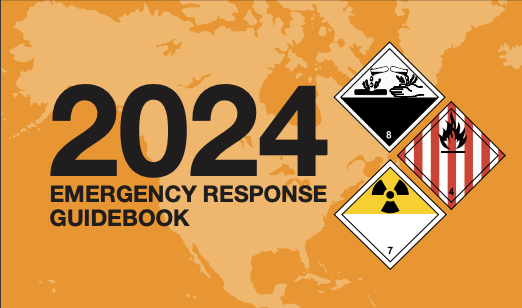
• Emergency Response Guidebook (ERG): The ERG is another essential tool for ERTs. It guides identifying hazardous materials based on UN/NA numbers, protective distances, and recommended PPE during an emergency.
Gas Detection Equipment: Essential Tools for Hazmat Technicians
Gas monitors are critical for identifying and quantifying hazardous gases during a response. Knowing how to use and interpret readings from PID monitors, multi-gas detectors, and simple tools like litmus paper can help technicians safely navigate hazardous environments.
Photoionization Detectors (PIDs):
• Use: PIDs detect volatile organic compounds (VOCs) and other toxic gases by measuring their ionization potential. They give a reading in parts per million (ppm), helping technicians assess the concentration of dangerous gases in real time.
• Venturi Effect and Detection: Some gases can pass undetected by other systems but can be effectively measured with PID due to the unique ionization process involved in detection.
• Best Practice: Use PID monitors where hazardous vapours or gases are suspected, such as around storage tanks, spill sites, or confined spaces.
Multi-Gas Monitors:
• Use: Multi-gas detectors monitor multiple gases simultaneously, including oxygen levels, carbon monoxide (CO), hydrogen sulfide (H₂S), and flammable gases. These detectors are essential for identifying oxygen-deficient atmospheres, toxic gas buildup, or explosive risks.
• Best Practice: Carry a multi-gas monitor when entering confined spaces or areas with potential hazardous chemical releases. These devices provide immediate alerts when safe limits are exceeded.
Litmus Paper:
• Use: Simple but effective, litmus paper helps quickly identify the presence of acids or bases in a liquid spill. The paper changes color depending on the substance’s pH level.
• Best Practice: Use litmus paper as an initial, low-tech way to assess chemical hazards. While it won’t provide detailed data like gas monitors, it’s helpful in detecting potential risks from chemical leaks or spills.
PIDs vs. Infrared (IR) Monitors:
• Use: While PID monitors detect a wide range of gases, infrared gas detectors specialize in detecting hydrocarbons in larger quantities. IR monitors are particularly useful in detecting methane and other combustible gases.
• Best Practice: Choose the appropriate gas detection device based on the known or suspected chemicals at the scene.
Dangers of Overexposure and the Role of Gas Monitors
The primary role of gas monitors is to prevent exposure to hazardous gases, which can have both short- and long-term health effects. Overexposure to toxic chemicals can result in respiratory issues, chemical burns, neurological damage, or even death. Gas monitors provide an early warning system, allowing technicians to evacuate or adjust their PPE before exposure reaches dangerous levels.
1. Monitor Placement: Ensure gas monitors are correctly placed, especially in confined spaces. Gases like H₂S are heavier than air and may accumulate at low points, while lighter gases like methane rise.
2. Respond to Alerts: Do not ignore an alarm when a monitor triggers it. This indicates that levels are above safe exposure limits, and immediate action is needed.
Overwatch: Train with us and benefit from thousands of hours of real-world experience. We don’t just train you—we transform your team in three simple steps:
Why risk your team’s competence on instructors with only theoretical knowledge? Don’t settle. Your team’s safety and effectiveness are very important. Act now so your team isn’t left behind. Contact us today to arrange top-tier emergency response and safety training.
At Overwatch Rescue, we provide comprehensive training on using gas detection equipment and emergency response procedures for hazardous materials. Partner with us for specialised training in gas monitoring, chemical identification, and exposure limits to ensure your team is prepared to handle hazmat incidents safely. Don’t wait until it’s too late—contact us today to learn more!
#workplacesafety #emergencyresponse #rescuestandby #securerescueempower
