Our mission is to unlock the potential within each individual and organization through tailored, engaging, and effective safety and emergency response training.

Get in Touch
Get in Touch
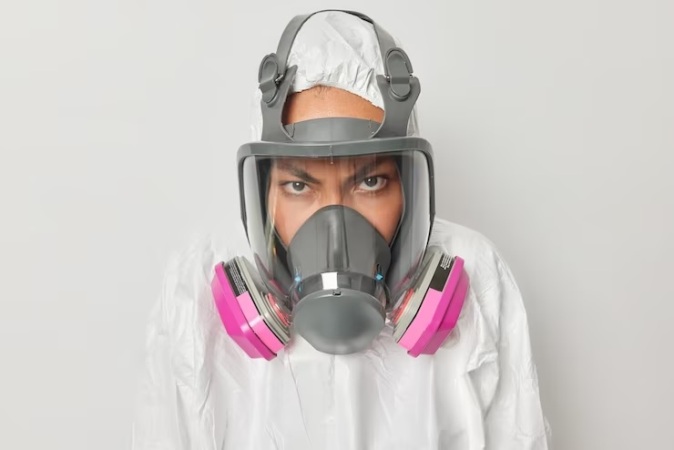
When responding to hazardous material (hazmat) incidents, the right respiratory protection is critical to ensure safety. Different situations demand different equipment, and it’s essential to understand the strengths and limitations of each type. Let’s break down three main types of respiratory protection: Self-Contained Breathing Apparatus (SCBA), Air-Purifying Respirators (APR) with Hoods, and Filtered Masks.
Self-Contained Breathing Apparatus (SCBA)
SCBA is often considered the gold standard in hazmat incidents, especially in situations where the air is immediately dangerous to life or health (IDLH). It provides the wearer with a constant supply of clean air from a tank.
Pros:
• Full protection: SCBA offers comprehensive respiratory protection in environments where the air is contaminated or lacks oxygen.
• Independence: The system doesn’t rely on external air sources, so it’s ideal in IDLH environments where the air quality cannot be trusted.
• High-pressure systems: These provide longer durations of safe breathing time, critical in complex, prolonged rescues.
Cons:
• Weight: SCBA units can be heavy and cumbersome, reducing mobility and causing fatigue over time.
• Limited air supply: The amount of air is finite, meaning there’s a set time limit to operate before needing to refill the tank or exit the hazardous environment.
• Training: Proper use requires extensive training to ensure safety and efficiency in high-stress environments.
Air-Purifying Respirators (APR) with Hoods
APR with hoods are another common option in less immediately hazardous environments. These devices filter the surrounding air through cartridges or filters to remove harmful contaminants before reaching the wearer’s lungs.
Pros:
• Lighter and more flexible: APR units are significantly lighter than SCBA, making them ideal for long shifts and environments where mobility is essential.
• Variety of filters: Different filters can be used depending on the specific chemicals or gases present. This adaptability allows for cost-effective use in various situations.
Cons:
• Not for IDLH environments: APR hoods rely on the air around you, so they are ineffective in environments with low oxygen levels or extremely high concentrations of contaminants.
• Filter limitations: The choice of filter is critical. Inadequate or expired filters could lead to exposure. You also need to ensure you’re using the right type for the specific hazard, as different chemicals require different filtration methods.
• Breathing resistance: The wearer may experience some resistance when inhaling, making prolonged use physically demanding, especially in stressful conditions.
Filtered Masks
Filtered masks range from simple dust masks to more advanced particulate filters designed to remove specific contaminants like asbestos, silica, or certain chemical vapors.
Pros:
• Cost-effective: These masks are relatively inexpensive, making them accessible for a wide range of applications.
• Lightweight: Ideal for low-level exposures, they offer a balance between protection and comfort.
• Convenient: Easy to deploy and carry, filtered masks are great for situations where full respiratory protection is not needed.
Cons:
• Limited protection: Filtered masks only protect against certain particulates and low-level chemical exposures. They’re not suitable for IDLH environments or where there is insufficient oxygen.
• No protection for eyes or skin: Most filtered masks offer no protection for other vulnerable areas, like the eyes, face, and skin, which are often critical in hazmat incidents.
• Fit and seal: A poor fit can compromise protection, allowing harmful contaminants to bypass the filter and reach the respiratory system.
Understanding Filter Classifications
For both APRs and filtered masks, it’s essential to choose the right filter based on the hazard. Filters come in different types, each designed for specific contaminants:
• P100 (HEPA): These filters are designed to block 99.97% of particulate matter, including dust, asbestos, and lead.
• Organic Vapor (OV): These filters are effective against certain organic gases and vapors, such as solvents, paint fumes, and pesticides.
• Acid Gas (AG): Protects against sulfur dioxide, hydrogen chloride, and other acidic gases.
• Combination filters: Many modern respirators use a combination of these to handle mixed exposures in various scenarios.
Always ensure that the filter type matches the chemical hazard and that filters are checked for expiration before use.
Choosing the Right Equipment for the Job
When selecting respiratory protection for a hazmat incident, always assess the nature of the hazard first:
• For IDLH environments: SCBA is your best option.
• For moderate exposure environments with adequate oxygen: APR hoods with appropriate filters provide protection without the bulk of SCBA.
• For minimal exposure or particulate matter: Filtered masks offer adequate, low-cost protection.
Selecting the correct respiratory equipment is essential for ensuring the safety of response teams. Knowing when and how to use each type can mean the difference between life and death in hazmat operations.
#HazmatSafety #RescueTeam #RespiratoryProtection #SCBA #APRHoods #FilteredMasks #EmergencyResponse #SafetyFirst #HazmatResponse #ConfinedSpaceRescue #OverwatchRescue
